

What therapies actually exist for osteoarthritis – a comparison
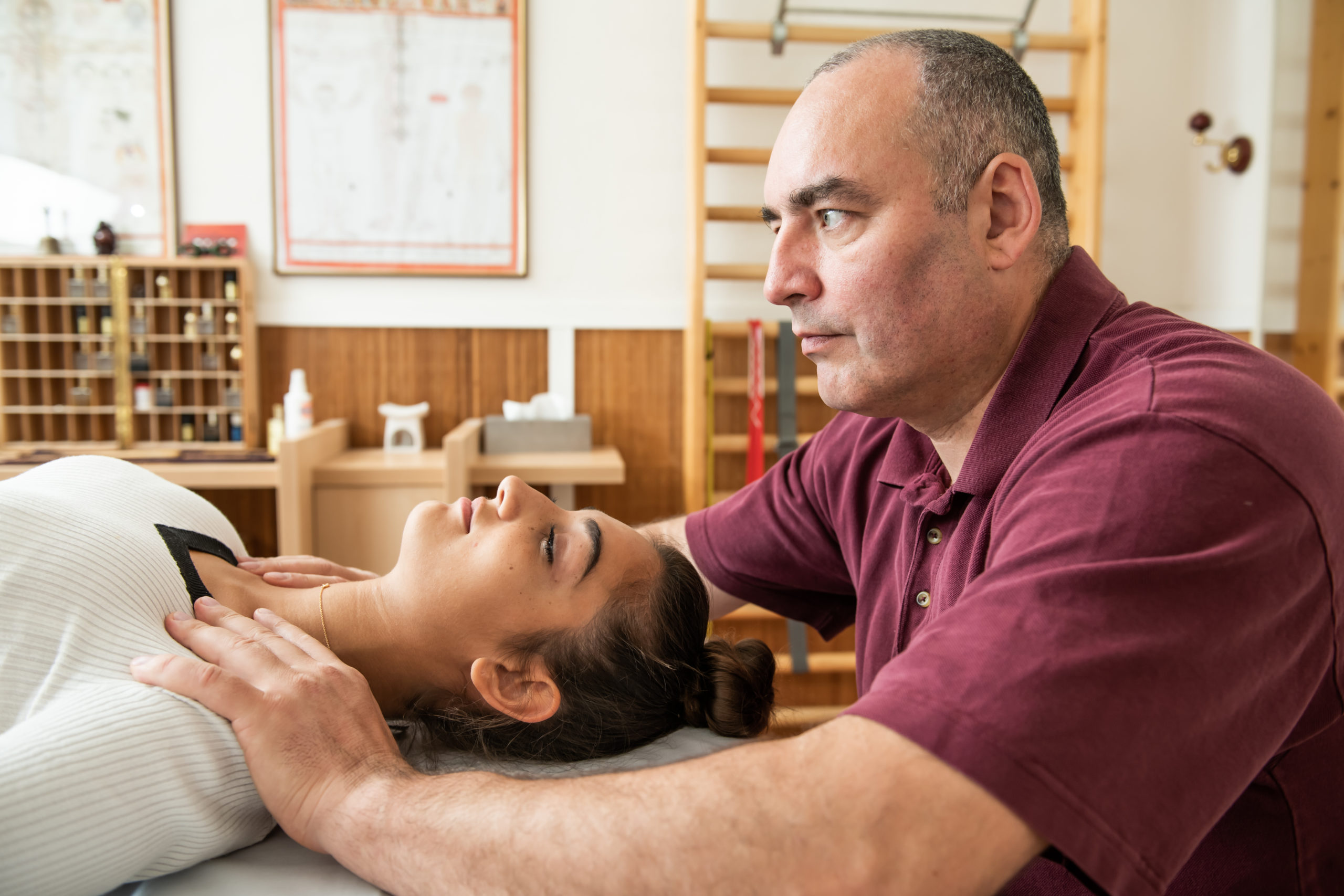
Osteoarthritis Therapy Comparison
What are the advantages and disadvantages of the different treatment methods for osteoarthritis?
Here, we list some and compare them with the therapies offered at Umahaus. From shockwave therapy to Tibetan medicine?
In Western medicine, osteoarthritis is understood as a natural wear-and-tear process of the joint cartilage, mechanically caused by abrasion, similar to an old, worn-out shoe, whose progression can be positively influenced by various forms of therapy.
The shoulder is tense and its movement is restricted. The arm can no longer be lifted, and patients experience shoulder pain. The X-ray shows osteoarthritis.
The usual diagnosis is then ‘Frozen Shoulder’ (adhesive capsulitis), ‘Osteochondrosis’, ‘Inflammation’, ‘Calcific Tendinitis’ (Tendinosis Calcarea), or ‘Wear and Tear of the Shoulder’ (Omarthrosis).
In the Western medical tradition, a distinction is made between primary and secondary osteoarthritis.
In primary osteoarthritis, there is a loss of cartilage layer because cartilage-building and cartilage-degrading processes are out of balance. It is assumed that either predisposition and/or overuse are responsible for this.
Tibetan medicine also assumes that an imbalance in the human body can be held responsible for this type of pain, but predisposition (constitutional type) can be counteracted with the right impulses. In the Tibetan healing tradition, both the cosmos and humans are composed of the five elements: air, fire, earth, water, and space. The constitutional type results from the respective proportions of these elements, which lead to three basic energies that determine the constitutional type: the Wind type (Lung), the Bile-Fire type (Tripa), and the Water-Earth type (Badkan).
Secondary osteoarthritis is often explained by tendon tears or old bone fractures in the shoulder, but it is added that a predisposition to shoulder dislocation due to loose tissue can also be the cause. An avoidance posture, also called secondary posture, can also lead to secondary osteoarthritis, which affects the entire musculoskeletal system and can result in painful joint overload. Impaired blood circulation in the humeral head, which can be triggered by taking certain medications such as chemotherapeutics, is another possible cause. Rhythm therapy instruments like the UMATIs are used during our treatments at Umahaus, especially for circulatory disorders, and are ideal for bone regeneration support.
Osteoarthritis is very restrictive for those affected, and if left untreated, it can significantly reduce quality of life. CT scans and X-rays can hardly show how much some patients are plagued by pain. But even without pain, the disease can continue to progress, which may eventually lead to the need for an artificial joint. Does the future look bleak? Has the time come when you are unable to work due to osteoarthritis in your fingers, or do you need to apply for a reduced earning capacity pension due to osteoarthritis in your hands or knee joint?
The currently offered treatments always aim to alleviate symptoms.
Conservative Therapies
Painkillers – Diclofenac, Ibuprofen
Non-opioid analgesics (NSAIDs) are the most commonly used medications to relieve pain, inflammation, and stiffness in osteoarthritis.
NSAIDs work by preventing an enzyme called cyclooxygenase (COX) from producing hormone-like chemicals called prostaglandins. Prostaglandins are one of the most important factors in the body that contribute to inflammation.
Most NSAIDs are inexpensive and are therefore among the first medications prescribed to people with aching joints. They are available for oral intake or for rubbing onto the skin over the painful joint and muscle.
However, in a meta-study published in 2020, the authors pointed out
that all included studies were sponsored by the manufacturers of diclofenac ointment for topical application. Tibetan medicine avoids such broad generalizations about individuals. Not all pain can be treated with ibuprofen, just as not all people want to watch the same one-minute viral video on TikTok or YouTube. Our treatment methods seek the cause of joint stiffness, the psychological imbalance. In ‘Frozen Shoulder’, the shoulder stiffens in 2-3% of people living in the West between 40 and 60 years of age, usually more women, out of the blue. Is it a protective reflex? If deposits occur, they are understood in Tibetan medicine as blockages that lead to insufficient blood supply in that area.
The Just Ignore It Method
John Sarno – ‘Just ignore the pain and talk yourself into feeling better.’
Although not many in Germany are familiar with him, Sarno is probably America’s most famous back pain doctor. Before his death in 2017, he published four books and gained a cult-like following of thousands of patients.
John Sarno was a specialist in rehabilitation medicine and had very different ideas about the causes of pain, especially back pain, than his colleagues, who ridiculed and ostracized him. John Sarno was primarily active in the 1980s and 90s, a time when pain was assumed to be mainly caused by a mechanical problem (e.g., a bulging disc or joint osteoarthritis). Instead, he argued that pain was actually the result of a psychosomatic process and emotional factors.
He believed that the brain distracts us from experiencing negative emotions by creating pain. Perhaps we don’t want to admit the uncomfortable truth that we are angry with our children or hate our job, so we focus on the pain instead. He also believed that pain arises from an insignificant and slightly reduced oxygen and blood supply to the body’s muscles and nerves. Our brain unconsciously diverts blood away from certain body regions, and that causes pain. (If this focus on the unconscious sounds familiar to you, it’s because Sarno was heavily influenced by Freud. His million-selling book ‘The Divided Mind’ is about psychosomatic medicine).
He instructed his patients to keep a diary or seek psychotherapy to gain a better understanding of their repressed emotions, which are the actual triggers of their chronic pain. He also advised them to immediately become physically active again. What he recommended as treatment was essentially cognitive behavioral therapy, namely the elimination of fear-avoidance behavior and catastrophizing, before anyone had even heard of it.
Sarno claimed that anatomical anomalies such as herniated discs were not the actual source of pain for many people – and called these injuries “normal anomalies.” In the last two decades, research findings have increasingly supported him. For example, when comparing people with the same MRI results showing the same back injury – e.g., herniated disc or joint osteoarthritis – some may suffer from terrible chronic pain, while others have no pain at all.
Sarno was also ridiculed by his medical colleagues. During his lifetime, he had little influence on medical research.
It took an unprecedented opioid epidemic in the US – instead of a charismatic doctor – to initiate a change that partially vindicates Sarno.
In Western rehabilitation medicine, it is now common to view chronic back pain as a “biopsychosocial” condition. This means that biological factors (such as a person’s weight or spinal structure) can play a role, but psychological and social factors also contribute.
A study published in the journal Pain was the first large-scale, randomized, controlled trial to show that guiding people with chronic pain (in this case, caused by fibromyalgia) to process and express strong emotions like anger is better than standard cognitive behavioral therapy for reducing fibromyalgia symptoms.
Roger Chou, a professor at Oregon Health and Science University, remarked on Sarno’s claimed 75 percent success rate, “It’s not really credible to claim that you can cure 75% or more of patients with chronic low back pain, especially since no one has been able to replicate or even come close to that kind of success.”
Tibetan medicine has recognized the biopsychosocial connection of a pathological symptom for 2500 years and has firmly integrated it into treatment. The experienced therapist knows about the different types of human anxieties and also that pathological symptoms are expressions of the forbidden self. From the perspective of Tibetan medicine, many diseases can be intervened by first dampening the excessively strong energy element (be it wind, fire, or earth) and then strengthening the weaker element to restore balance.
Dietary Supplements
“The use of glucosamine in the management of osteoarthritis remains controversial, and the specific mechanisms of action regarding pain and joint function have not yet been sufficiently researched.” From a peer-reviewed study by Petra Stölting.
In Tibetan medicine, there is a plant considered a panacea, but since it only grows near the Himalayas, it is not available to the global market. In this book on Tibetan Medicine, you will find more information. The book is not an osteoarthritis cookbook or an osteoarthritis book per se, yet you will find instructions there on what diet is helpful for osteoarthritis and which plants and herbs might help.
Shockwave therapy is often used for calcific tendinitis – a shockwave device looks quite similar to a hammer drill. The contact surface in the device’s barrel is a rapidly moving projectile. The technique is based on the principle of kidney stone lithotripters.
Experts seem to find the evidence insufficient despite positive study data. Nevertheless, they assess: there are “indications” of significant benefit, according to the delicate wording.
Autologous Blood Treatment for Knee Pain and Osteoarthritis
The goal is to slow the progressive course of osteoarthritis and alleviate pain. Long-term studies on autologous blood treatment are still lacking. Likewise, there is no clear theory as to why it actually works. However, according to anecdotal reports, it seems to help. “But we don’t yet know exactly how and for which patients,” says Lukas Wildi, a rheumatologist at the University Hospital Zurich.
Hyaluron
Hyaluronic acids exist in different sizes: long-chain (high molecular weight) and short-chain (low molecular weight) forms. Both can be injected into joint spaces. Low molecular weight hyaluronic acid is used for acute osteoarthritis and is said to have anti-inflammatory and pain-relieving effects. High molecular weight hyaluronic acid increases joint lubrication and is therefore more often administered into an irritation-free joint. There is a risk that the cartilage may lose substance due to frequent injections, and ultimately more patients may require an artificial joint.
Cortisone, like hyaluron, is not well suited due to constant injections into the joint. Steroid treatments can only temporarily improve symptoms and are intended as a temporary therapy; furthermore, they do not shorten the disease process. In addition, cortisone permanently destroys tissue.
Ultrasound
Ultrasound is a supportive form of therapy. In this application, a transducer is held against the painful shoulder. In the ultrasound range, sound waves penetrate the tissue and cause deep heating there. This leads to an increase in the metabolic rate and thus to intensified remodeling processes. Adhesions of the tissue can thus be treated supportively up to a depth of approx. 2.5 cm.
Biomechanical Stimulation (BMS) and Matrix Rhythm Therapy
According to BMS therapists, the importance of the smallest blood vessels and their influence on our health, namely a functioning microcirculation, is significantly underestimated. Microcirculation is responsible for the transport of oxygen and nutrients through the smallest vessels in the circulatory system, i.e., arterioles, venules, collateral pathways, and capillaries, as well as for the removal of carbon dioxide (CO2).
Microcirculation also serves to regulate blood flow and tissue perfusion, thereby influencing blood pressure and the response to inflammation, which includes edema.
The healthy body of any warm-blooded animal, cat, dog, or human body oscillates between 8 and 12 times per second. Biomechanical stimulation is intended to regenerate inflamed tissue and restore the disturbed natural intrinsic oscillation (also called resting vibration) of the musculature. With videomicroscopy, this intrinsic oscillation is easier to see as it involves minute vibrations that we can usually only see with the naked eye during shivering. Even during sleep, muscle fiber activity maintains microcirculation in the tissue around the cells (extracellular matrix). The heart pumps blood to the periphery, and from there, passive muscle tremors maintain metabolism into the extracellular matrix.
With a gentle, mechanically applied external vibration, specialists aim to restart the metabolism in the cells and thus detoxify the body, all without losing a drop of sweat through physical exertion. This is intended to promote regeneration, especially after operations, inflammations, or overexertion.
This therapy method is essentially a continuation of vibration therapy.
Biomechanical stimulation or Matrix Rhythm Therapy is frequently used in sports medicine and rehabilitation. Another perspective is to view this form of therapy as an aid to positively change pain memory.
Our vibration therapy instrument UMATI Professional and our UMATI therapy concept, similar to Matrix Rhythm Therapy (and the vibrating plate for osteoarthritis), is a deep-acting form of therapy that not only stimulates the skin, muscles, fascia, lymph, and reflex zones to improve blood circulation, relax muscles, and enhance the removal of metabolic products in the body, but also considers the extracellular matrix. Nevertheless, UMATI plays an even more significant role. It brings patients back to life.
Tibetan medicine is equally influenced by Chinese medicine and Ayurveda. Ayurvedic medicine for osteoarthritis, as well as Chinese medicine for osteoarthritis, are thus united in the Tibetan medical system. Do not hesitate to contact us. We are happy to help you.
Hardening and stagnation are detrimental to living tissue.
With UMATI, fluids can be shifted in all tissue layers, leading to an increased metabolism in neglected body regions. Simultaneously, the patient experiences many new, sensitive stimuli during a treatment. A deep perception for different muscle tensions is activated.
To build a healthy lifestyle and physical posture, UMATI fulfills two fundamental treatment principles: tissue movement and activation of body awareness. The patient learns to control the state of tension and responds better to posture training. Additionally, due to the abundance of signals arriving at the spinal cord, the pain signal is suppressed (Gate Control Principle). These optimizations relieve the body and help the mind free itself from a constricted state.